


For decades, digital marketing has been built on a simple assumption.
There are only two real advertising channels.
Search and social.
Search captures intent.
Social creates demand.
Every strategy, budget model, attribution framework, and creative playbook has been designed around this dual system.
And then AI arrived.
Not as another platform.
Not as another media channel.
But as a new decision layer.
Today, roughly 1 in 6 people globally already use generative AI tools, and nearly nine in ten organisations are integrating AI into daily workflows.
This is not just technology adoption.
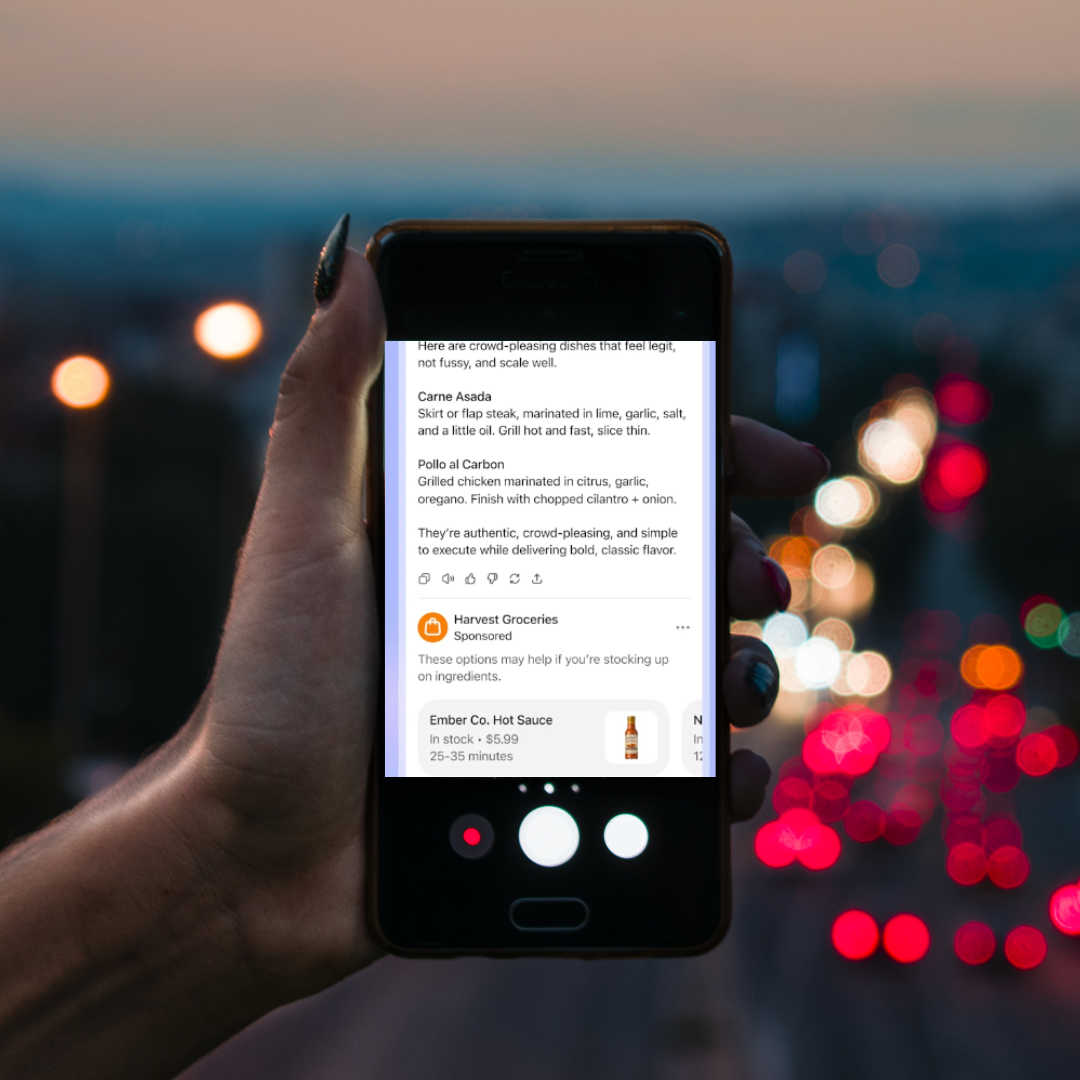
It is the birth of a new advertising channel.
Conversational ads are not search ads.
They are not social ads.
They are something far more disruptive.
They sit inside the moment when a user is thinking, asking, comparing, and deciding.
This is not a new channel added to the marketing stack.
It is a new operating system for how demand is formed.
Most marketers did not plan for this.
Why conversational ads are fundamentally different
To understand the shift, we need to rethink how advertising actually works.
The traditional model
Search ads
Users know what they want.
They search.
Brands compete on keywords.
Social ads
Users are not searching.
Brands interrupt attention.
Demand is manufactured.
Marketplace ads
Users are ready to buy.
Platforms control visibility.
Brands compete on placement and price.
These models share one thing.
They assume the user is the decision maker.
The conversational model
Conversational ads operate differently.
The user does not search.
The user asks.
The user does not compare manually.
The AI compares.
The user does not browse dozens of brands.
The AI filters options.
In this model, brands are not competing for clicks.
They are competing for relevance in the logic of an AI system.
This is why conversational ads feel unsettling.
They do not appear as banners.
They do not feel like interruptions.
They feel like recommendations.
And recommendations are far more powerful than ads.
The psychology of AI driven advertising
Traditional advertising works by exposure.
Conversational advertising works by trust.
When an AI suggests a brand, it does not feel like marketing.
It feels like advice.
This is why OpenAI has been cautious in its approach to advertising.
The company has publicly stated that ads should be relevant, clearly separated from answers, and designed to preserve user trust.
That statement reveals something deeper.
If trust is lost, conversational ads collapse.
If trust is maintained, conversational ads become the most influential marketing channel ever created.
This is the real tension.
China understood conversational commerce before the West
While the West is debating AI ads, China has already built something similar.
Not in AI assistants, but in platforms.
Douyin and the logic of conversation
On Douyin, users do not simply search for products.
They watch content.
They ask questions in comments.
They interact with creators.
They receive recommendations in real time.
The decision process happens inside conversation.
This is not search.
This is not social.
This is conversational commerce.
Xiaohongshu and trust based discovery
On Xiaohongshu, users trust peer recommendations more than ads.
They ask questions.
They read experiences.
They compare narratives.
Brands do not win because of keywords.
They win because of credibility inside conversations.
In many ways, China built the first version of conversational advertising without calling it AI.
The West is only now catching up.
Why marketers are unprepared
Most marketing teams are structured around outdated assumptions.
Media planning is broken
Budgets are split into search, social, and display.
Conversational ads do not fit into any of these categories.
They are not bought through traditional media buying.
They are influenced through data, brand signals, and product information.
Attribution is obsolete
Clicks, impressions, and conversions do not capture AI driven influence.
If an AI recommends a brand and the user later buys it through another channel, who gets credit?
Traditional attribution models cannot answer this.
SEO is no longer enough
SEO optimises for search engines.
Conversational ads require optimisation for AI systems.
This is where GEO marketing emerges.
Brands must learn how AI interprets their identity, credibility, and relevance.
The question is no longer:
Can users find your brand?
The question is:
Will AI choose your brand?
Search, social, and conversation: three distinct channels
To understand the future, we need a new framework.
Search
Intent is explicit.
Users know what they want.
Social
Intent is latent.
Brands stimulate desire.
Conversation
Intent is interpreted.
AI mediates decision making.
This third layer changes everything.
It compresses the funnel.
Discovery, evaluation, and recommendation happen in a single flow.
This is why conversational ads are not an extension of digital marketing.
They are a structural shift.
What brands should do now
Brands that wait will lose visibility inside AI systems.
Brands that adapt will gain disproportionate advantage.
Build AI readable brand signals
AI systems rely on structured data, credibility markers, and consistent narratives.
Brands must become legible to machines, not just humans.
Rethink product information
AI does not interpret marketing slogans.
It interprets facts, features, comparisons, and context.
Brands must restructure how they present products.
Learn from China
Chinese platforms have already trained brands to think in conversations, not campaigns.
Global brands should study how Douyin and Xiaohongshu shape trust and discovery.
The future of AI advertising looks closer to China than Silicon Valley.
The era of clicks is ending. The era of AI decisions is beginning.
For years, brands competed on visibility.
In the AI era, brands will compete on understanding.
Not how loudly they advertise.
But how clearly AI understands their value.
Search and social taught brands how to fight for attention.
Conversational ads will force brands to fight for relevance inside machines.
Most marketers did not plan for this.
But the shift has already begun.