technology

From awkward prototypes to kung fu masters: China’s humanoid robot breakthrough

Categories

China’s humanoid robots just stole the world’s biggest stage

For years, humanoid robots have been treated like fragile science experiments. They could walk slowly, wave awkwardly, and occasionally fall over at the worst possible moment.

This year, China changed that narrative completely.

During the 2026 Spring Festival Gala, the most watched television broadcast on earth, humanoid robots did not appear as background props. They were front and center. They performed kung fu. They danced in perfect synchronisation. They moved with balance, precision, and confidence.

What the world saw was not a demonstration.

It was a declaration.

China’s humanoid robotics industry has arrived.

Why the Spring Festival Gala matters more than any tech conference

The Spring Festival Gala is not just entertainment. It is watched by more than 600 million people across China and globally. No technology company gets that level of exposure at CES, MWC, or any Western tech event.

When humanoid robots appeared on that stage, it was equivalent to launching a product directly into the national consciousness.

This was China showing its population, and the world, what comes next.

Unlike controlled laboratory demonstrations, these robots performed in real world conditions. They interacted with human performers, adapted to complex movements, and executed coordinated routines without visible instability.

This is a massive leap forward from just a few years ago, when humanoid robots struggled with basic mobility.

The companies leading China’s humanoid robotics revolution

Several Chinese robotics companies are now emerging as global leaders in humanoid development.
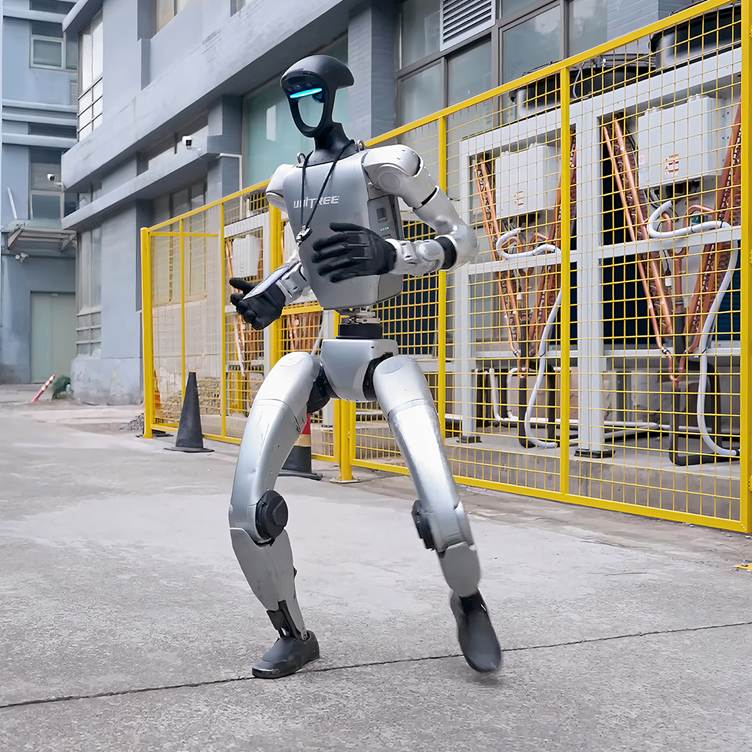
Unitree Robotics

Unitree is perhaps the most important company in this space. Originally known for its quadruped robots, Unitree has rapidly expanded into humanoid robotics.

Its latest humanoid models demonstrate advanced balance control, agile movement, and coordinated full body motion. Unitree’s strength lies in its ability to move quickly from prototype to production, leveraging China’s manufacturing ecosystem.

This is not theoretical technology. It is being prepared for scale.
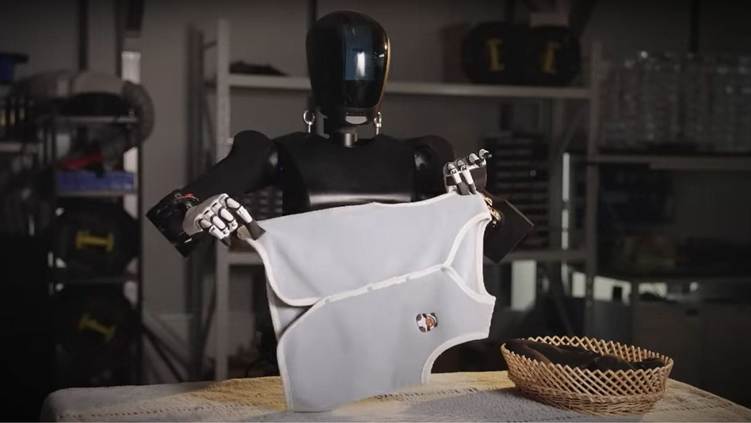
MagicLab

MagicLab focuses on embodied AI, combining physical robotics with intelligent decision making systems. Their humanoids are designed not just to move, but to interact with environments and execute tasks autonomously.

This is critical for real world deployment in factories, logistics, and service environments.

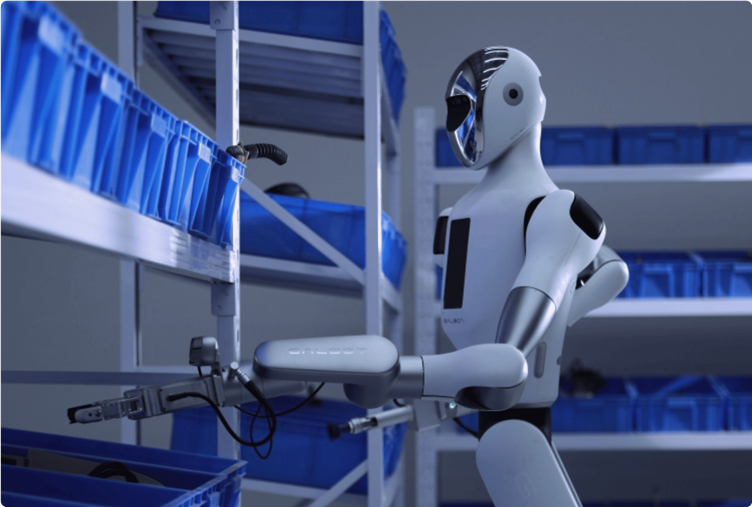
Galbot

Galbot’s humanoids emphasize stability and coordinated group motion. Their robots demonstrated complex synchronized routines during the Gala, showcasing advances in real time balance correction and motion planning.

These capabilities are essential for industrial applications where precision and reliability are required.
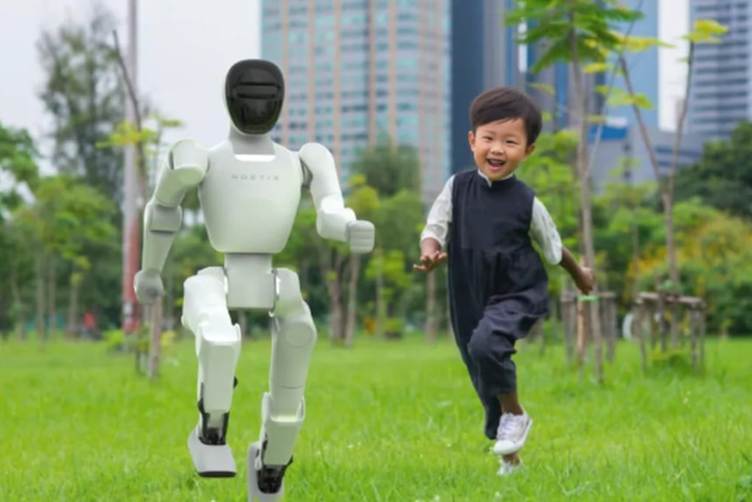
Noetix

Noetix is developing humanoid platforms designed for long term deployment across multiple industries. Their focus includes adaptability, modular design, and scalable manufacturing.

This reflects a shift from experimental robots to commercially viable machines.
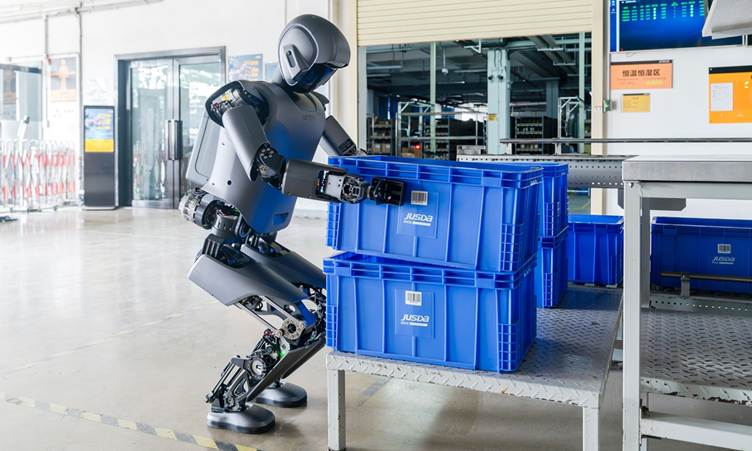
Why China is advancing faster than everyone else

China’s progress in humanoid robotics is not accidental. It follows a pattern that has already played out in electric vehicles, drones, and solar energy.

Three structural advantages stand out.

First, manufacturing scale. China can produce hardware faster and cheaper than any other country.

Second, integrated supply chains. Robotics companies have direct access to motors, sensors, batteries, and processors without relying on fragmented international suppliers.

Third, aggressive iteration. Chinese companies move from prototype to production rapidly, improving products through real world deployment instead of extended laboratory testing.

This combination accelerates progress dramatically.

This is not about performance. It is about deployment

The real significance of China’s humanoid robots is not that they can dance or perform martial arts.

It is that they are becoming deployable.

China faces a rapidly aging population and increasing labour costs. Humanoid robots offer a scalable solution for manufacturing, logistics, and service industries.

Unlike fixed industrial robots, humanoids can operate in human designed environments without requiring infrastructure changes.

This makes them far more versatile.

Factories, warehouses, retail stores, and public services could all integrate humanoid workers over the next decade.

What was once science fiction is becoming industrial reality.

Why global businesses should pay attention now

China is not treating humanoid robotics as a research project. It is treating it as a strategic industry.

The same playbook used to dominate electric vehicles and batteries is now being applied to robotics.

Scale first. Improve quickly. Deploy everywhere.

The Spring Festival Gala was not just entertainment.

It was a preview of the future.

Businesses that understand where China is heading will be better positioned to navigate the next decade of technological change.

Those that ignore it will be reacting to it later.

Turning insight into strategic advantage

At Digital Crew, we help global brands understand what is really happening inside China’s technology and digital ecosystem.

If your business wants to stay ahead of emerging trends shaping China’s future, get in touch with our team.

The next wave is already here.

    Get in Touch

    Our Partners