

For decades, global brand trust followed a predictable timeline.
Japanese brands like Toyota and Sony spent thirty years proving themselves. Korean giants like Samsung and Hyundai spent twenty. Trust was earned slowly through consistent performance, retail expansion, and relentless advertising.
Chinese brands are doing it in under ten.
Not because time suddenly sped up. Because the strategy changed.
Instead of waiting for consumers to trust them, Chinese brands are borrowing trust from institutions that consumers already believe in: football clubs, global entertainment, fashion collaborations, and cultural partnerships.
Trust is no longer built from scratch. It is transferred.
The real barrier was never product quality. It was perception.
For years, Chinese companies dominated manufacturing but remained invisible as brands. Consumers in Europe, Australia, and the United States interacted with Chinese products daily without knowing it. China built the world’s supply chain but not its emotional connection.
That created a structural ceiling.
A brand like BYD could produce world class electric vehicles, but global consumers still defaulted to Tesla, BMW, or Toyota. Not because those cars were objectively better, but because those brands were familiar.
Familiarity creates comfort. Comfort creates trust.
Chinese brands needed a shortcut.
They found it in culture.
Sports partnerships: the fastest way to global credibility
Few institutions command more loyalty than sports clubs. Fans do not just watch teams. They identify with them. Trust them. Defend them.
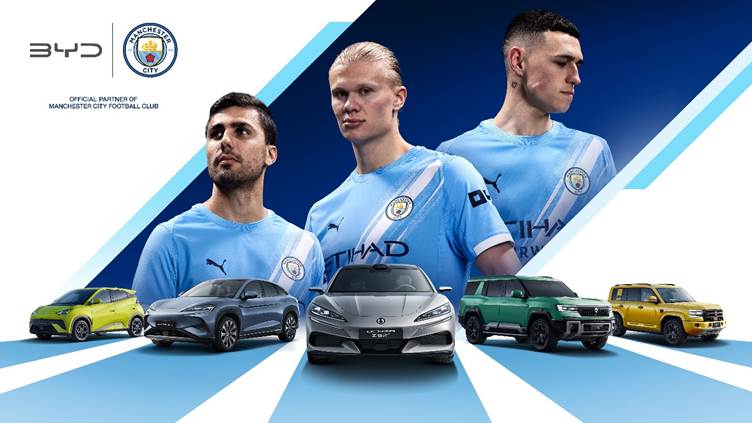
When Chinese electric vehicle maker BYD partnered with Manchester City, it was not just a marketing exercise. It was an identity transfer.
Manchester City is one of the most recognized football clubs in the world, with hundreds of millions of fans across Europe, Asia, and the Middle East. By attaching itself to the club, BYD inserted its brand directly into that emotional ecosystem.
Every match, every jersey, every stadium screen becomes a trust signal.
Consumers who had never heard of BYD suddenly saw it associated with elite performance, excellence, and global competition.
No traditional advertising campaign could replicate that effect at the same speed.
Anta’s transformation from local manufacturer to global sports brand
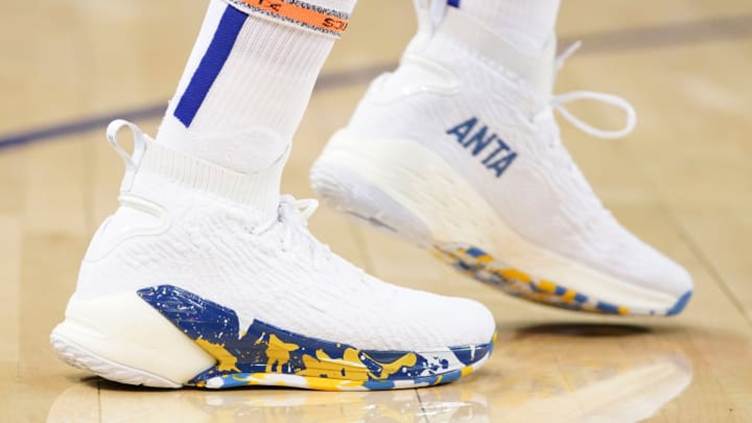
Anta was once known primarily inside China. Today, it owns global sports brands like Amer Sports, which includes Salomon and Arc’teryx.
By acquiring established global brands and sponsoring international athletes, Anta accelerated its legitimacy overnight. Instead of convincing consumers to trust a new Chinese brand, it embedded itself inside brands consumers already trusted.
The result is visible in global retail expansion. Anta is no longer perceived as a Chinese manufacturer. It is perceived as a global sports company.
Ownership and partnerships changed perception faster than organic growth ever could.
Entertainment partnerships: entering culture instead of interrupting it
Advertising interrupts attention. Entertainment earns it.
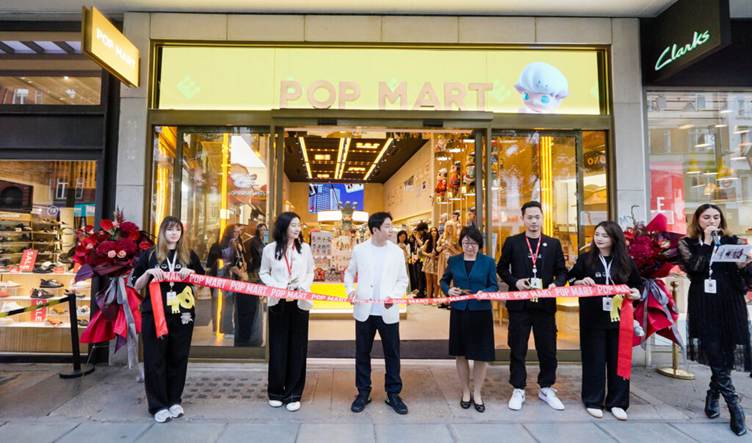
Chinese collectible brand Pop Mart understood this early. Instead of relying on traditional advertising, it built partnerships with global designers, artists, and cultural franchises.
Its Labubu and Molly characters are not just products. They are cultural symbols.
Pop Mart stores in cities like London, Paris, and Singapore are filled with customers who have no connection to China but feel connected to the brand’s creative universe.
The strategy worked because Pop Mart did not try to sell first. It tried to belong first.
Belonging creates trust. Trust creates sales.
Cultural partnerships reduce uncertainty
Consumers naturally hesitate when encountering unfamiliar brands. Partnerships reduce that hesitation instantly.
When a Chinese brand appears alongside a familiar sports team, artist, or cultural institution, it inherits credibility through association.
The consumer’s mental process changes from:
“What is this brand?”
to
“If it is associated with this institution, it must be legitimate.”
That shift happens subconsciously.
And it happens immediately.
What once took decades now takes months.
This strategy is accelerating because Chinese brands now have the resources and urgency
Two forces are driving this trend.
First, Chinese companies now have the capital to execute global partnerships at scale. Brands like BYD, Anta, and Pop Mart are no longer small challengers. They are global competitors with significant financial strength.
Second, domestic competition inside China is extremely intense. Hundreds of brands compete in every category. Global expansion is no longer optional. It is necessary for long term growth.
Partnerships offer the fastest route.
Building global trust organically could take decades. Strategic partnerships achieve similar results in a fraction of the time.
What global brands should understand from this shift
The lesson is simple but profound.
Trust is no longer built slowly through exposure alone. It is built strategically through association.
Chinese brands are not waiting for global consumers to discover them. They are inserting themselves into global culture deliberately.
They are appearing where consumers already feel comfortable.
Sports stadiums.
Entertainment franchises.
Cultural collaborations.
This reduces resistance and accelerates acceptance.
What this means for brands entering China
The same principle applies in reverse.
Foreign brands entering China cannot rely solely on advertising. They must integrate into China’s cultural and platform ecosystems.
Chinese consumers trust brands they encounter within familiar environments: Xiaohongshu, Douyin, Tmall, influencers, and cultural partnerships.
Trust must be embedded, not broadcast.
Brands that understand this expand faster. Brands that ignore it struggle to gain traction.
How Digital Crew helps brands build trust inside China’s digital ecosystem
China operates on its own cultural and platform logic. Trust is built through visibility inside platforms like Xiaohongshu, Douyin, and Tmall, not through traditional advertising alone.
Digital Crew helps global brands integrate into these ecosystems strategically. By building platform presence, cultural relevance, and localized positioning, brands can accelerate trust with Chinese consumers.
The companies that understand this shift will grow faster.
The ones that do not will remain invisible.