A trade show lead can look promising on paper.
Someone visits the stand, asks a few good questions, scans a QR code and takes the brochure. The salesperson follows up. The prospect asks for a technical specification, then disappears for three weeks.
Nothing unusual there.
Perhaps the engineer is checking whether the product will work with an existing system. Procurement needs a price. A manager wants to know whether the supplier has local support. Someone else is comparing alternatives.
The lead has not necessarily gone cold. The buying process is simply happening across several people, and not all of them are speaking to sales.
That is where WeChat becomes useful for B2B brands in China.
It gives buyers a place to check the company, read deeper information, share useful material with colleagues and continue a conversation when they are ready. For the brand, it creates a way to connect content, events, sales and customer relationships rather than treating each interaction as a separate campaign.
Tencent reported 1.439 billion combined monthly active users across Weixin and WeChat at the end of Q2 2026, up 2% year on year. The scale is substantial, but it does not tell a B2B company how many relevant buyers it can reach. The more important question is whether the brand can become a credible option when those buyers begin evaluating suppliers.
And in B2B, credibility is rarely built in one interaction.
WeChat B2B marketing is the use of Official Account content, WeCom, events, QR codes, technical education, case studies, lead capture and CRM connected follow up to build relationships with business buyers in China.
It supports the longer process between first discovering a supplier and making a commercial decision.
For some companies, that process begins with an article. For others, it starts at an exhibition, through Baidu search, a distributor introduction, a webinar or a direct sales conversation.
WeChat can help connect those encounters.
An Official Account provides a credible place to learn about the company. WeCom supports direct communication between customers and company representatives. A Mini Program may help with a specific action, such as registering for an event or requesting a quotation. CRM records what happens after the inquiry.
The right combination depends on the business.
A company selling industrial machinery will not need the same WeChat setup as a professional services firm or a university recruiting corporate partners.
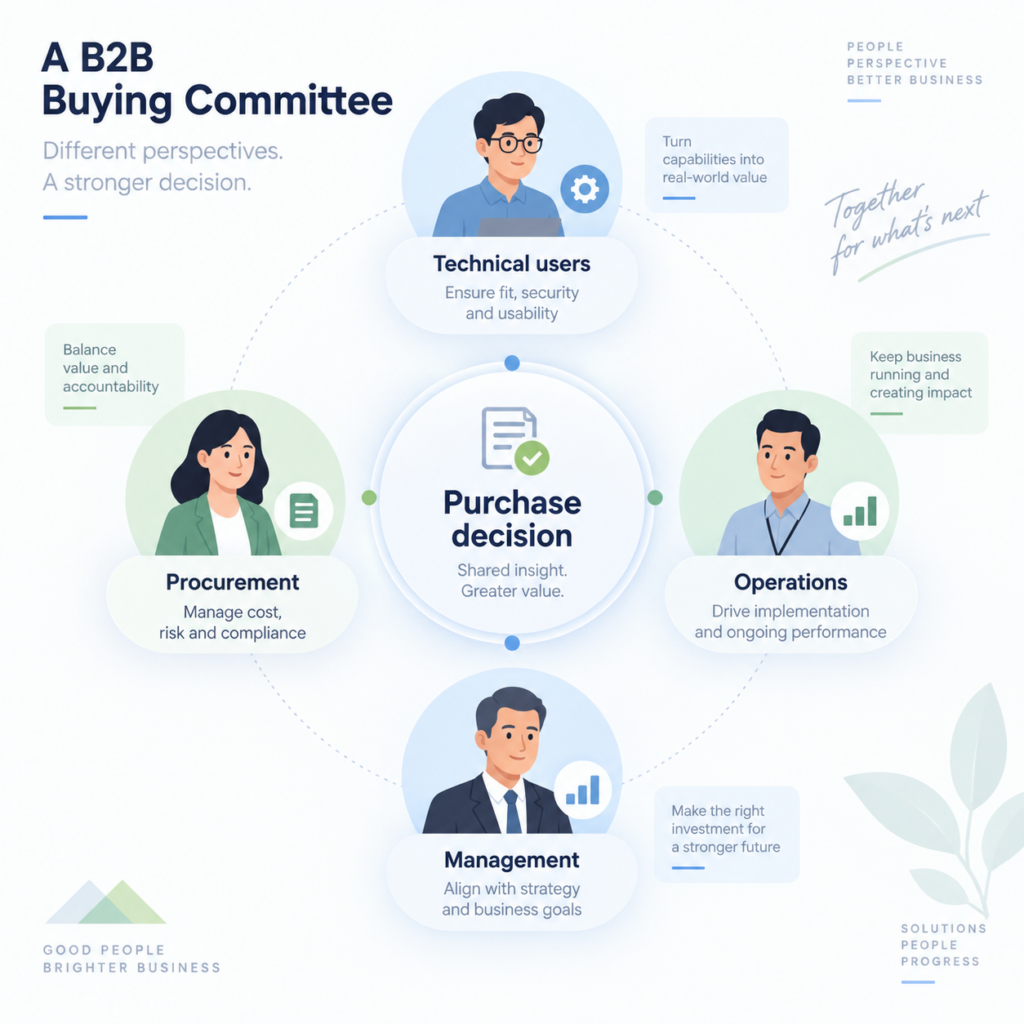
A B2B purchase usually involves more than one person and more than one question.
The person who first discovers the supplier may not be the person who approves the purchase. A technical user may care about performance and compatibility. Procurement may focus on price, terms and supplier risk. A manager may need to justify the investment. Operations may want to know what happens after installation.
A single promotional article cannot answer all of those questions.
That is why WeChat’s value for B2B is often less about creating a large audience and more about making useful information available throughout the decision.
Consider a company evaluating a new industrial water treatment system.
The engineer may need specifications, capacity, operating requirements and maintenance information. Procurement may want supplier credentials and commercial terms. Management may need evidence that the system has worked in a comparable environment.
A useful WeChat article can give one person something credible to forward to another.
That matters because B2B marketing is not always trying to persuade the person reading the content. Sometimes it is helping that person persuade someone else.
The wider B2B research supports this principle. The 2025 Edelman and LinkedIn B2B Thought Leadership Impact Report, based on 1,934 US business decision makers, found that 71% of hidden buyers had little or no interaction with sales. It also found that 79% were more likely to advocate for vendors that consistently produced high quality thought leadership.
Those are US survey findings, not China or WeChat specific results. They are useful here because they illustrate the role content can play with people who influence a purchase without becoming visible sales leads.
A global supplier may have an impressive website, a strong reputation in its home market and a long list of international customers.
A Chinese buyer may still want to know something much more immediate.
Is the company active in China? Is the product available here? Can I speak to someone locally? Is there Chinese language information? Who provides support? Has the company worked on a relevant project?
An Official Account can help answer those questions through company information, product content, case studies, service details and clear contact paths.
It should not be treated as a replacement for the company’s website. The two can work together, with the website supporting deeper product information, search visibility and structured lead capture.
WeChat is also useful because B2B relationships often develop through conversation.
An exhibition contact may not be ready for a quotation. A buyer may need to return with a technical question. A distributor may want an updated product sheet. A customer may need support months after the original purchase.
WeCom gives companies a more structured way to manage those conversations, while customers continue using Weixin or WeChat.
That is particularly valuable when the sales cycle is long and the relationship should not depend entirely on one employee’s personal account.
There is no single B2B WeChat journey, but several patterns are common enough to plan around.
A buyer might discover the brand through search or an industry article, read about a product, check a case study and then contact sales. Another might meet the company at an exhibition, scan a WeCom QR code and request technical information a week later. An existing customer may use an Official Account to find service updates, product documentation or the right person to contact.
The important point is that the buyer’s needs change as the decision develops.
Buyer role | What they may need to understand | Useful WeChat content or action |
Engineer or technical user | Specifications, compatibility, performance, installation | Technical guides, demonstrations, product documents |
Procurement | Supplier credibility, availability, terms, risk | Company credentials, certifications, distributor information |
Operations | Reliability, maintenance, service and support | Service guides, customer examples, support contacts |
Management | Business value, implementation risk, strategic fit | Case studies, project outcomes, expert commentary |
Distributor or partner | Product knowledge, sales support, local coordination | Product resources, training, partner information |
Existing customer | Updates, support, new requirements | WeCom contact, service information, product updates |
These are not rigid personas. In smaller businesses, one person may perform several of these roles. The point is to recognize that different questions require different answers.
A practical B2B WeChat strategy should connect five stages: awareness, education, lead capture, sales follow up and nurture.
The stages are a planning framework rather than a promise that every buyer will move through them in a neat sequence. Someone may arrive ready to request a quote. Another may read for months before speaking to sales.
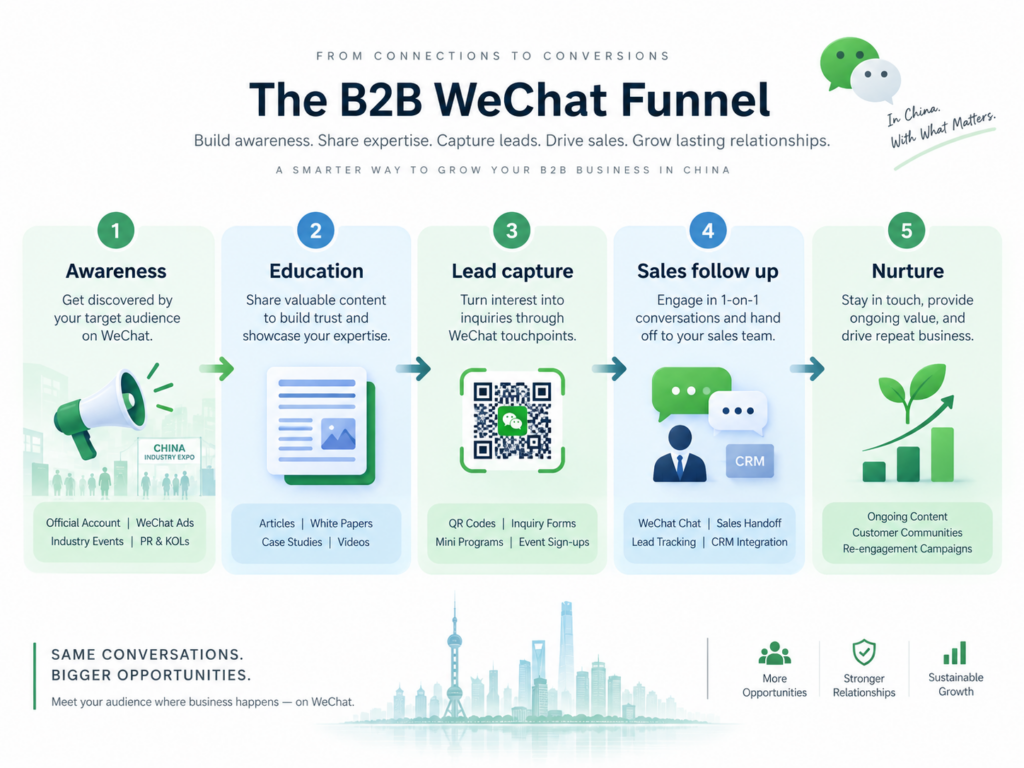
The first job is to make the right companies aware that the supplier exists.
WeChat content can contribute through industry commentary, useful articles, event promotion, Video Accounts, search discovery and paid distribution. Other channels such as Baidu, exhibitions, industry media, KOLs or direct sales may create the initial interest.
For B2B, awareness should be targeted toward the industries, job functions and business problems the company can actually serve.
An article reaching 800 relevant engineers may be more valuable than one reaching 80,000 people with no connection to the category.
Once a buyer is interested, the questions become more specific.
How does the product work? What problem does it solve? What makes it different? Has it been used in a similar environment? What are the limitations? What support is available?
This is where technical guides, product comparisons, project stories, expert interviews and FAQs become important.
The content should help the buyer make a better decision, even if that means acknowledging that the product is not suitable for every application.
Credibility improves when brands explain tradeoffs rather than pretending every solution is right for everyone.
A reader becomes a lead when they take an action that gives the company a legitimate reason to follow up.
That might be requesting a quotation, registering for a technical webinar, asking for a product demonstration, downloading a document through a consent based form or contacting a sales representative.
The action should match the buyer’s intent.
Someone reading an introductory article may not be ready to complete a detailed sales form. Someone requesting a quotation probably is.
After the inquiry, the relationship needs an owner.
The salesperson should know what the customer requested, which company they represent, what they have already received and what should happen next.
WeCom can support the conversation, while CRM can record the lead, account, opportunity and follow up activity.
The aim is to make the process more reliable without making the conversation feel automated or impersonal.
Not every qualified prospect is ready to buy immediately.
Some are waiting for a budget cycle. Others need technical approval, a new project, a tender or agreement from internal stakeholders.
Useful follow up may include a relevant case study, an invitation to a technical session, updated specifications or a timely sales conversation.
Sending the same monthly promotional message to every contact is not nurturing. It is simply broadcasting to a smaller audience.
Funnel stage | WeChat tactic | What to measure |
Awareness | Industry articles, thought leadership, event content | Relevant reach, reads, shares, traffic sources |
Consideration | Technical guides, case studies, product comparisons | Content engagement, document requests, menu clicks |
Lead capture | QR codes, forms, Mini Program or landing page | Qualified inquiries, registrations, lead source |
Sales follow up | WeCom and approved sales content | Sales accepted leads, conversations, meetings |
Nurture | Events, useful updates, technical content | Returning prospects, reengagement, opportunity progression |
Commercial outcome | CRM connected sales process | Opportunities, assisted pipeline, won business where attributable |
The metric should become more commercial as the buyer moves closer to a decision.
The strongest starting point is not the global content calendar. It is the questions customers and sales teams are already dealing with.
A practical content plan might include the following types of material.
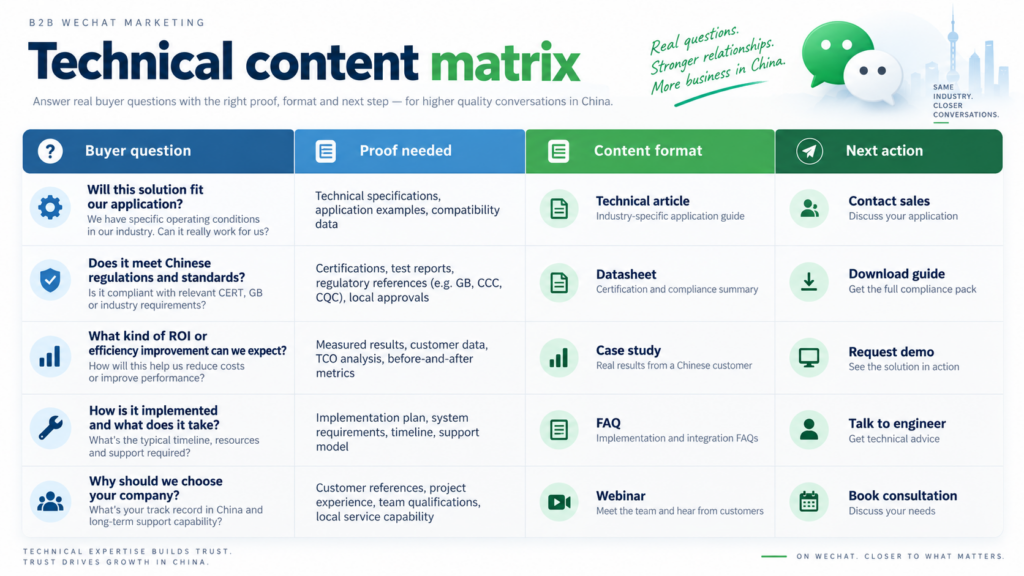
Explain the problems your product is designed to solve.
A manufacturer might publish a guide to choosing between two filtration technologies. A software company might explain how its system integrates with existing infrastructure. An engineering firm might discuss common installation challenges.
The goal is to demonstrate expertise through useful explanation.
Avoid making every article a disguised product advertisement. Buyers can usually recognize when the conclusion was decided before the article was written.
B2B buyers often need detailed information before they are comfortable making contact.
That can include technical specifications, certifications, testing methods, manufacturing standards, performance limits, warranty information and maintenance requirements.
The information should be accurate, current and easy to access on a mobile device.
Where documents are essential to a purchase, provide a clear route to the latest approved version rather than forcing buyers to search through old articles or ask a salesperson for every PDF.
A strong B2B case study answers questions that a product brochure cannot.
What problem did the customer face? What was the operating environment? Why was the solution selected? How was it implemented? What changed afterwards?
The most useful details are often the least glamorous: technical constraints, installation challenges, measurable outcomes, service requirements and lessons learned.
If exact results cannot be published, a qualitative project story can still be valuable. It should simply avoid claiming results that have not been verified.
Brands can also build credibility by explaining changes in their customers’ industries.
That might mean new technology, changing customer requirements, supply chain issues, sustainability considerations or operational challenges.
The content should connect those developments to the reader’s actual business, not just repeat a headline from an industry news source.
In many B2B categories, buyers want to know who stands behind the product.
Interviews with engineers, technical specialists, project managers and service teams can make the company’s expertise more tangible.
A useful expert article does not need to sound like a corporate interview. It can begin with a real question customers ask and let the specialist explain the answer.
For international suppliers, local support is often part of the buying decision.
Content should make it easy to understand who provides installation, training, maintenance, spare parts, warranty support or technical assistance in China, where applicable.
Do not claim a local capability simply because the company has a global service network. Be specific about what is actually available in the market.
Exhibitions and technical events can generate useful content before and after the event.
Before the event, explain what attendees can learn and why it is worth meeting the team. Afterwards, share useful technical insights, demonstrations or answers to common questions.
The event should create material that remains useful after the stand has been packed away.
For a company publishing four substantial articles a month, a balanced example could look like this:
Content role | Example topic | Business purpose |
Customer question | How to evaluate a new industrial filtration system | Attract relevant research |
Product proof | Inside the testing and certification process | Build technical confidence |
Use case | How a solution was applied in a particular operating environment | Show practical relevance |
Action or service | Join a technical webinar or request a consultation | Create a useful next step |
This is an illustrative framework, not a rule that every B2B brand should publish four times a month.
The right frequency depends on the category, available expertise, audience demand and the quality of the material. A carefully researched technical article may be more valuable than several shallow posts.
Lead generation begins by deciding what a qualified lead actually means.
A marketing team may celebrate 300 new contacts. Sales may discover that most are students, competitors, suppliers or people with no relevant project.
The problem is not necessarily the campaign. It may be that marketing and sales never agreed on what they were trying to capture.
For many B2B companies, useful qualification signals include the person’s company, role, industry, location, product interest, business requirement and approximate timing.
Not every question needs to be asked immediately.
A technical webinar registration may only need a name, company, role and contact details. A quotation request may justify more detailed questions about specifications, quantity, application or project requirements.
Ask for information that helps the business respond properly, rather than making every prospect complete a lengthy form.
A generic “Contact us” button is often weaker than a specific offer connected to the content.
For example:
Request a technical consultation
Download the installation guide
Book a product demonstration
Register for the China webinar
Request a quotation
Speak with a local product specialist
The promise should be clear, and the experience after the click should deliver it.
A lead from an industrial equipment campaign may need a technical sales representative. A distributor inquiry may belong to a channel manager. A service request should not be treated as a new sales opportunity.
Routing should be decided before the campaign launches.
The minimum requirement is simple: every inquiry should have an owner, a next action and a way to see whether it was followed up.
WeCom is particularly useful for B2B companies because it supports direct customer communication while giving the business more structure around the relationship.
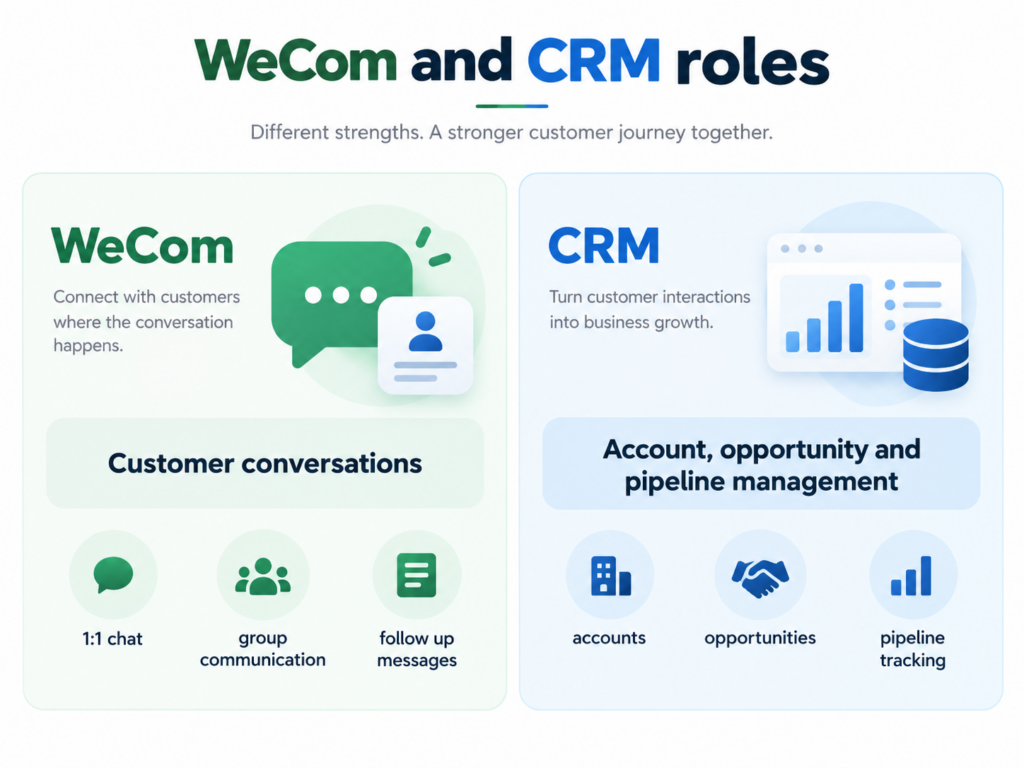
Tencent describes WeCom as an enterprise communication platform integrated with Weixin chats, Mini Programs and Weixin Pay. Customers can continue using Weixin while employees communicate through WeCom. Tencent also states that customer relationships can be retained by the company when an employee leaves.
At the WeCom 5.0 launch in August 2025, Tencent reported more than 14 million real enterprises and organizations on the platform and said businesses were serving more than 750 million Weixin users every day through WeCom. These are platform wide figures, not B2B specific adoption statistics.
A useful WeCom setup can help a salesperson maintain contact with a prospect, share approved technical information, arrange meetings, answer questions and coordinate follow up.
It can also support customer groups where there is a genuine shared purpose, such as distributor training or a technical event.
But WeCom should not automatically replace the company’s existing CRM.
For many international businesses, the better approach is to use WeCom as the customer communication layer and connect it with Salesforce, HubSpot or another CRM where opportunities, account ownership, reporting and wider sales processes are managed.
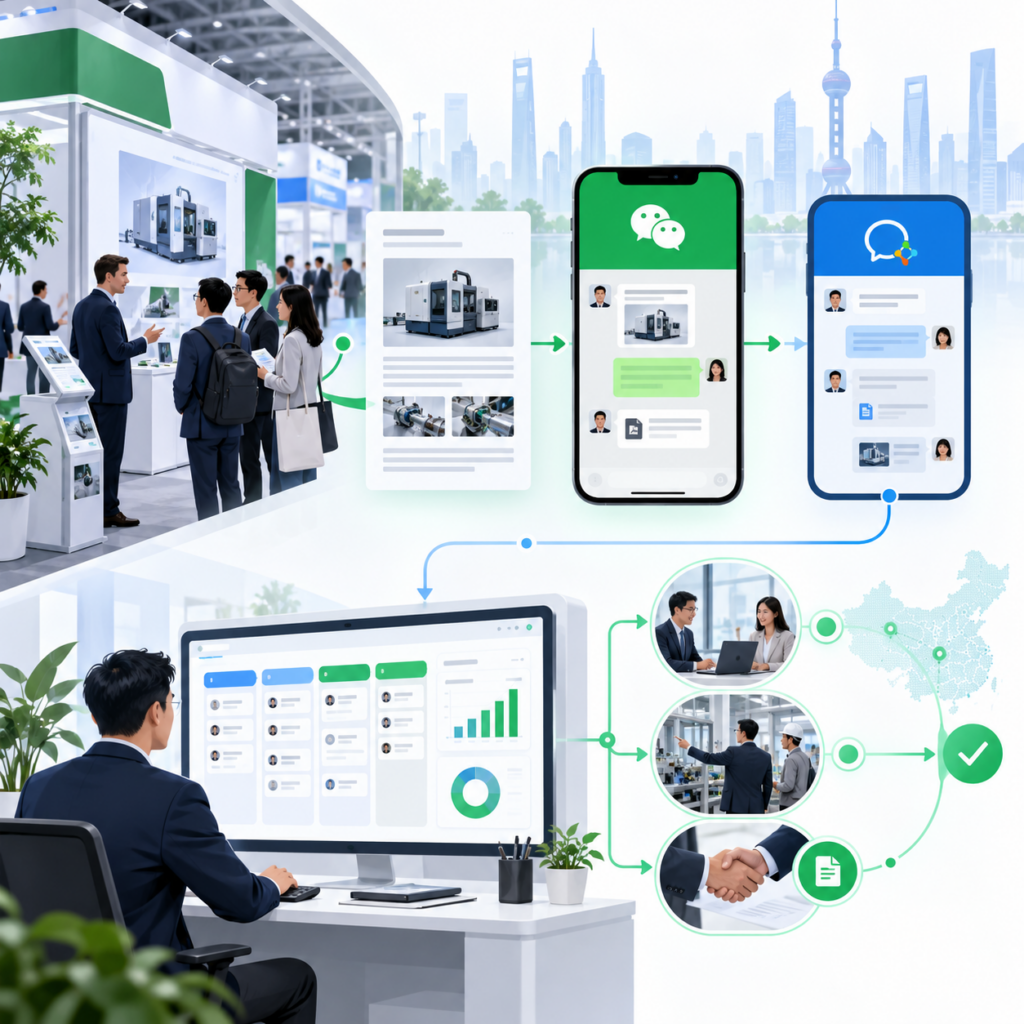
Consider a lead who scans a QR code at an exhibition.
The system should be able to identify the source of the contact, route the inquiry to the appropriate representative and record the relevant details in CRM where the integration and consent allow it.
The salesperson can then follow up with material relevant to the conversation rather than sending a generic introduction.
If the employee changes roles or leaves, the company should have a documented process for reassigning the relationship and preserving the information it is permitted to retain.
Technology can support that process. It cannot replace the need for clear ownership.
Exhibitions are one of the most natural entry points for B2B WeChat marketing.
But the QR code at the stand needs a purpose.
“Follow us on WeChat” gives the visitor very little reason to act.
“Get the technical specification and speak with our China engineering team” is much more useful, provided the brand can actually deliver that experience.
A good event journey might look like this:
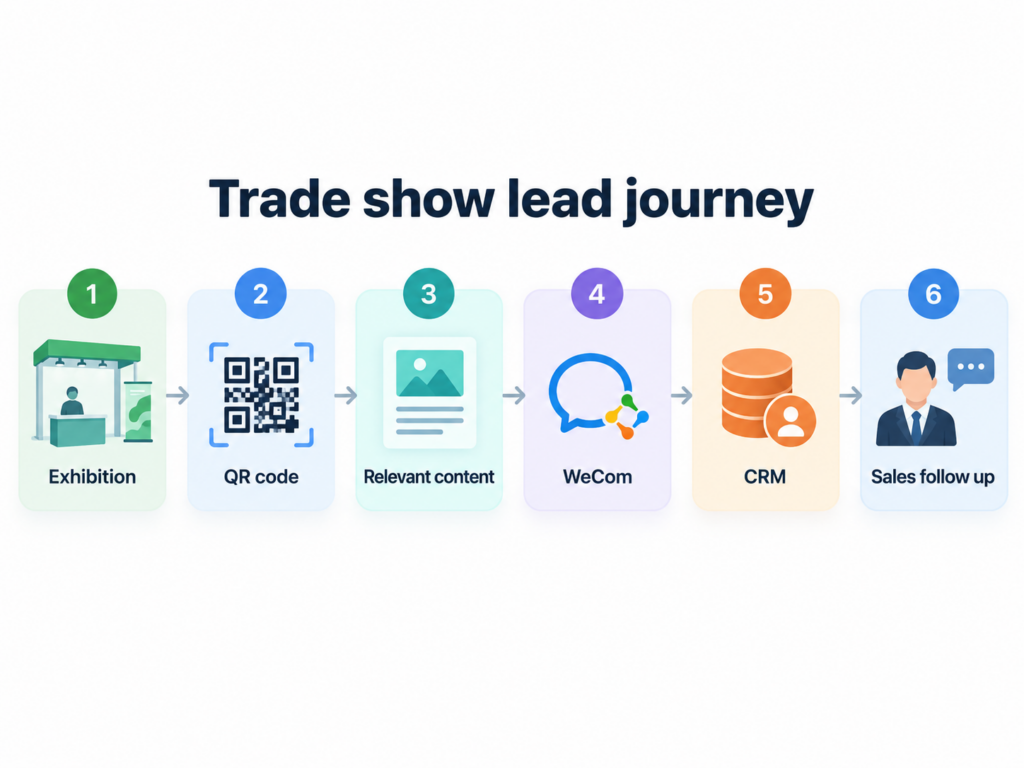
The exact path depends on what the visitor needs. Someone requesting a brochure may not need an immediate sales call. Someone asking for a quotation probably does.
Plan the audience, content, QR code destination, staff responsibilities and follow up process.
Make sure the account is credible and the information being offered is available in Chinese. Decide how contacts will be tagged by event, product interest or sales territory.
Give staff a simple way to capture context.
A name and phone number are useful, but a short note about the customer’s requirement may be far more valuable three weeks later.
Do not collect unnecessary personal information. Only request what the business needs for the stated purpose, and make sure the appropriate consent and privacy processes are in place.
Follow up with something related to the conversation.
That might be the specification requested, a relevant case study, a meeting invitation or an answer to a technical question.
The first message should make it clear why the salesperson is contacting the person.
A mass message that begins “Thank you for visiting our stand” and then launches into a promotional brochure is unlikely to make much use of the information collected at the event.
Sometimes. But a Mini Program should be built around a useful action, not because the company believes every China strategy needs one.
For B2B, potential use cases include product selectors, quotation requests, event registration, distributor access, service booking, spare parts information, training or order tracking.
A simple inquiry may be better handled through WeCom or a localized form. A detailed technical resource may belong on the company’s Chinese website.
Tencent reported in April 2026 that Mini Programs served more than 1.1 billion monthly active users, but that is an ecosystem statistic. It does not establish a business case for every B2B company to build one.
The decision should depend on the customer journey, required functionality, traffic source and ongoing operating costs.
B2B buyers may use different channels at different stages of research.
A buyer searching for a technical solution may begin on Baidu. Another may discover a supplier through industry media or an exhibition. WeChat may then become the place where they check the company, read articles or contact a representative.
The Chinese website remains important for detailed product information, technical documentation, search visibility and lead capture.
For international companies, website accessibility, hosting, ICP requirements where applicable and CRM integration should be reviewed as part of the broader China setup.
The objective is not to force every buyer into WeChat.
It is to make sure the buyer can find the right information and continue the relationship wherever the journey begins.
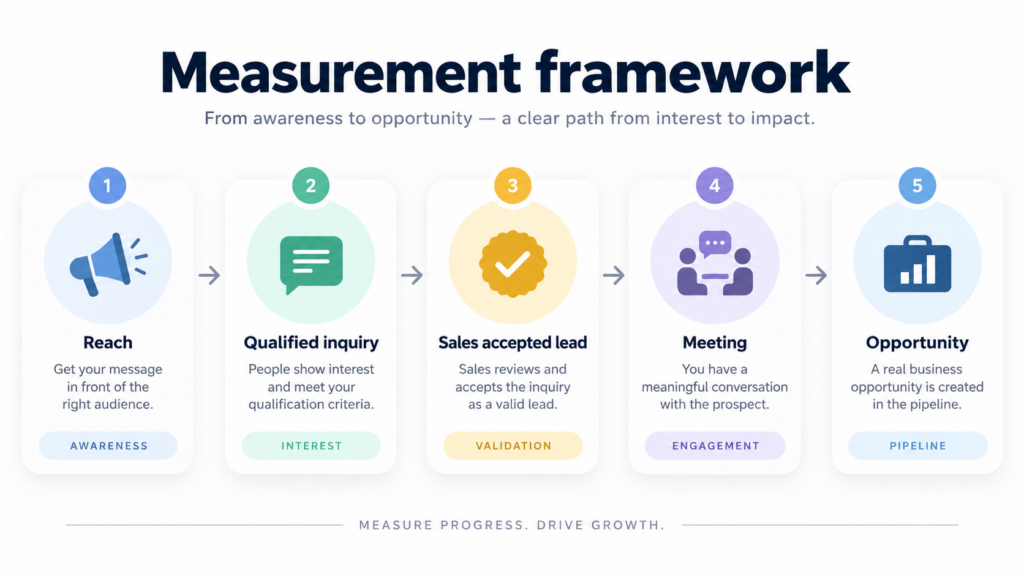
A B2B WeChat report should not end with followers and article reads.
Those numbers can help explain whether content is reaching people, but they do not show whether the activity is creating business value.
A useful measurement framework should connect marketing activity with sales progression.
Measurement layer | Questions to answer | Example metrics |
Reach | Are we reaching relevant audiences? | Reads, traffic sources, relevant follower growth |
Engagement | Is the content useful? | Shares, saves, document requests, menu clicks |
Lead capture | Are the right people making inquiries? | Leads by source, company, role and interest |
Qualification | Do the inquiries fit the business? | Qualified leads, sales accepted leads |
Sales activity | Is follow up happening? | Meetings, consultations, response time |
Pipeline | Are opportunities progressing? | Opportunities created, assisted pipeline |
Commercial outcome | Is activity contributing to business? | Won deals and attributable revenue where reliable |
A person who follows the Official Account is an audience member.
Someone who registers for a webinar may be a prospect.
Someone who requests a quotation for a relevant project may be a qualified lead.
These are different stages of interest. They should not all be reported as though they carry the same commercial value.
Marketing and sales should define what makes a lead worth pursuing.
For example, a marketing qualified lead might fit the target industry and show relevant interest. A sales accepted lead is one that sales has reviewed and agreed to pursue. A sales qualified lead may have a defined business requirement and a realistic next step.
The exact definitions should reflect the company’s sales process. There is no universal WeChat lead scoring model that works for every B2B category.
A buyer may read three articles, attend a webinar, speak with a distributor and later contact sales directly.
It would be misleading to claim that the final WeChat article generated the entire sale.
Where CRM and tracking are connected, brands can report influenced opportunities or assisted pipeline. Revenue attribution should only be claimed when the data supports it.
Company announcements have a place, but buyers are rarely waiting for another internal milestone.
Better approach: Connect company news to customer relevance and publish more content that answers real business questions.
A polished headline and three paragraphs of marketing copy may be enough for a campaign teaser. They are rarely enough for someone evaluating a complex product.
Better approach: Involve technical experts and provide the detail buyers need to make progress.
A buyer who has just read a technical guide should not have to start the research again.
Better approach: Connect the article to a relevant specification, case study, consultation or product page.
A campaign can generate inquiries and still fail because nobody knows who should respond.
Better approach: Define ownership, routing and CRM handoff before launch.
A sophisticated application can be expensive to build and maintain, especially when the audience is small or the required action is simple.
Better approach: Validate the business case and traffic source before development.
A large audience may look impressive while producing few relevant inquiries.
Better approach: Track lead quality, meetings, opportunities and other meaningful outcomes alongside reach.
Some customers benefit from shared discussion. Others prefer private technical or commercial conversations.
Better approach: Use WeChat groups when there is a genuine shared purpose, and use one to one communication where the relationship is more individual.
The most useful B2B WeChat strategies begin with a simple question:
What does the buyer need to understand before they can seriously consider this supplier?
For some companies, the answer is technical proof. For others, it is local support, relevant project experience, product availability or a direct conversation with someone who understands the application.
That should determine the content and the platform setup.
An Official Account can establish credibility. WeCom can support the relationship. A Mini Program may make a particular action easier. CRM can help the company manage what happens afterwards.
The tools matter, but the buying process should decide how they are used.
HBA provides a useful example of how this thinking can be applied to a professional services brand.
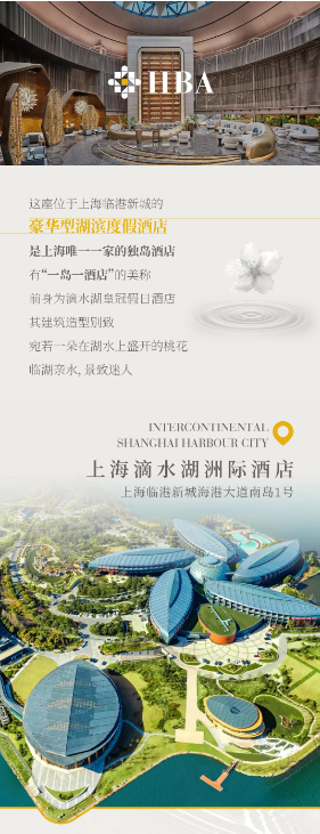
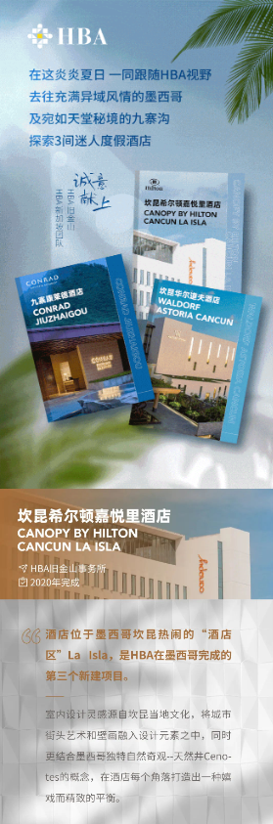
Our published HBA case study describes rebuilding its WeChat presence after a period of inactivity. The work included reviewing competitor activity, identifying content gaps, restructuring the account and developing content around premium storytelling, project depth and brand authority.
For a company working with hospitality and design decision makers, the value of that approach is clear. Potential clients need more than a brand announcement. They need to understand the company’s expertise, experience and relevance to their own projects.
Digital Crew can help international B2B brands plan WeChat as part of a wider China marketing and sales process.
This can include:
The objective is to connect the content, customer interaction and sales process so that each part supports the next.
Yes. WeChat can support brand credibility, technical education, event follow up, lead capture, customer communication and sales relationships. It is particularly useful for companies with longer buying cycles or products and services that require explanation before purchase.
Useful content includes technical guides, product specifications, case studies, industry insight, expert interviews, customer FAQs, service information and event content. The topics should reflect the questions buyers and sales teams encounter during the purchasing process.
WeCom allows company employees to communicate with customers using Weixin or WeChat. It supports more structured customer relationships, company level ownership and integration with wider CRM processes. It can help sales teams manage follow up, share information and preserve continuity when employees change roles or leave.
Yes, when the campaign or content gives relevant buyers a clear reason to make an inquiry. Lead capture may happen through WeCom, forms, Mini Programs, event registration or landing pages. Qualification should consider the company, role, business requirement and sales relevance rather than counting every follower as a lead.
Only when there is a useful action that justifies the development and ongoing maintenance. Examples include quotation requests, product selectors, event registration, distributor resources or service tools. A simple inquiry may be better handled through a form or WeCom.
Brands should measure relevant reach and engagement alongside qualified inquiries, sales accepted leads, meetings, opportunities and assisted pipeline. CRM integration can help connect marketing activity with sales progress, but revenue attribution should only be claimed when the data supports it.